Recently, talking with one of my friends from school, he reminded me of something from 11th grade. In his words: “Sanzhika isn’t at school for 1.5 months at a stretch — he’s either at chemistry training camps, or at olympiads, or somewhere else. Then at the end of the quarter the traveler shows up, you sit down to write the SOCh (the quarter-end test), and he magically aces it. It used to drive me crazy.”
I’m not writing this to boost my own ego (though I do remember it with a smile), but for a different reason that you’ll understand by the end. But first I’d like to answer why I was able to pull off these maneuvers.
First, I think these moments didn’t stick in my memory because while I was away from school I didn’t think about it at all. I just forgot about it. Partly because I had this confidence that no matter what topics the school covered by the end of the quarter, I’d catch up and do well. I don’t know why, but I was just sure of it; I’d pulled this off many times, and there was no reason to doubt it. And in 12th grade, when I was applying to universities and read on the Caltech website “This is the place where you will be challenged,” I treated it skeptically. How hard could it really be lol.
I was wrong. It was here, for the first time, that I caught myself thinking “this is too hard for me, I can’t do it.” When everything has come easily, and that paradigm changes literally in an instant, you don’t have time to process what happened. For example, even though the physics topics were interesting, I couldn’t solve anything on my own. Reading each problem on the exam, I doubted my ability to solve it. It felt like Russian roulette — if I got lucky I’d solve it, and if not, goodbye to a good grade. These thoughts were what kept stopping me from switching my major from chemistry to physics, because what if I’m just not good enough?
But something changed over time: I started solving problems on my own, I didn’t have to chase down the teaching assistant asking for hints, problems started feeling easier. Now, during my second year of physics, I feel that old confidence again. I understand that I probably won’t get a topic on the first try, but after a few hours of reading it’ll be okay. I probably won’t solve a problem right away, but I’ll come back the next day and it’ll work out.
And I thought that was it! Nothing is harder than physics — but then abstract math walked into the room. Literally a week ago, I was sitting and thinking that I needed to drop the group theory course because I was feeling helpless again. Looking at a homework problem, I thought only something supernatural would help me solve it. Now I’m writing this post and looking at those problems, and I realize they’re actually pretty simple (see below).
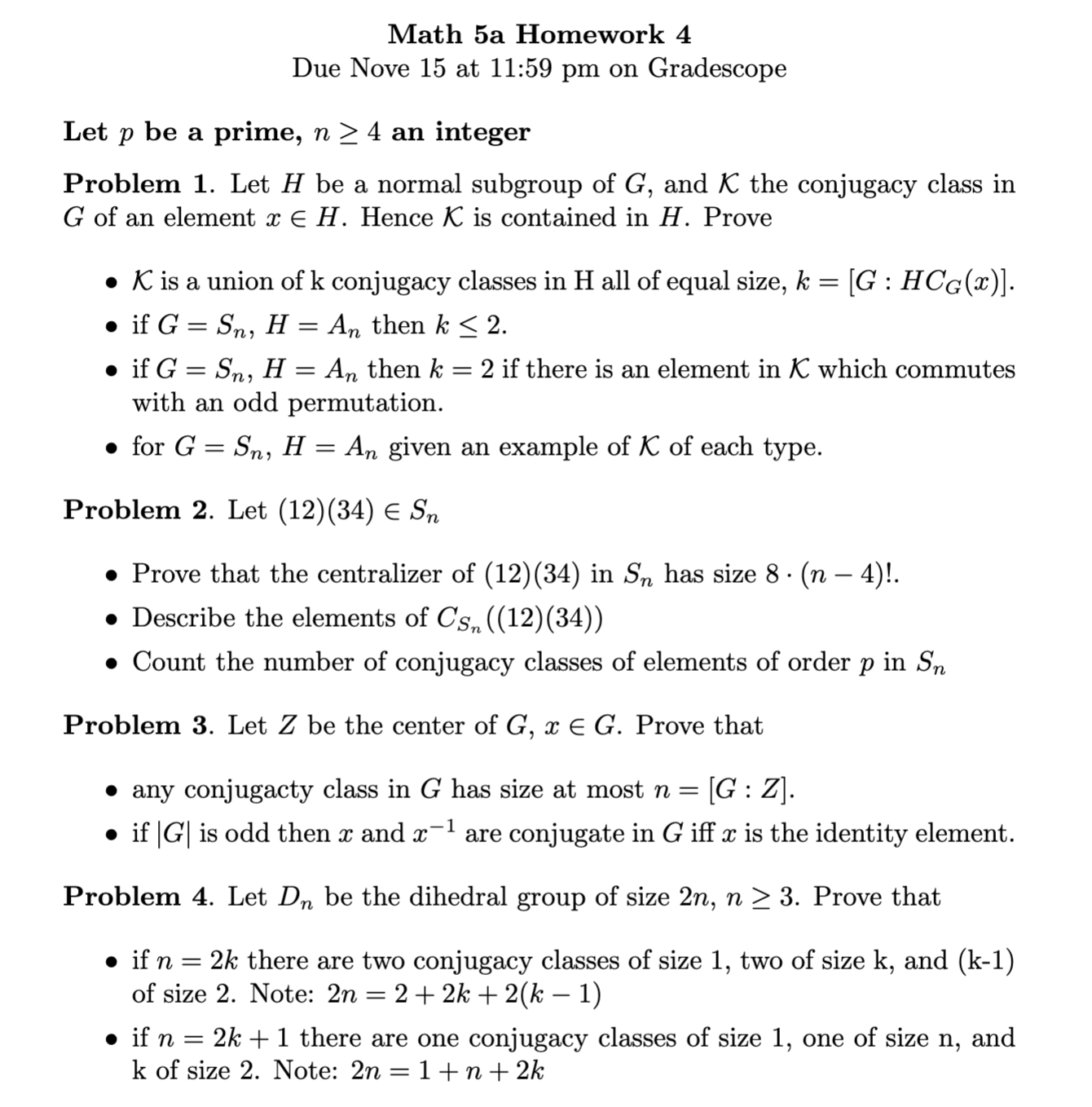
Now I have the confidence that I can understand abstract math — you just have to put in the effort and believe in yourself. In every moment when I thought “this is too hard for me,” I desperately convinced myself otherwise. I told myself I had to give it some time, that eventually I’d understand this topic, and I’d look back at the past with a smile. And it came true, and this feeling is best captured by a Caltech admissions post.
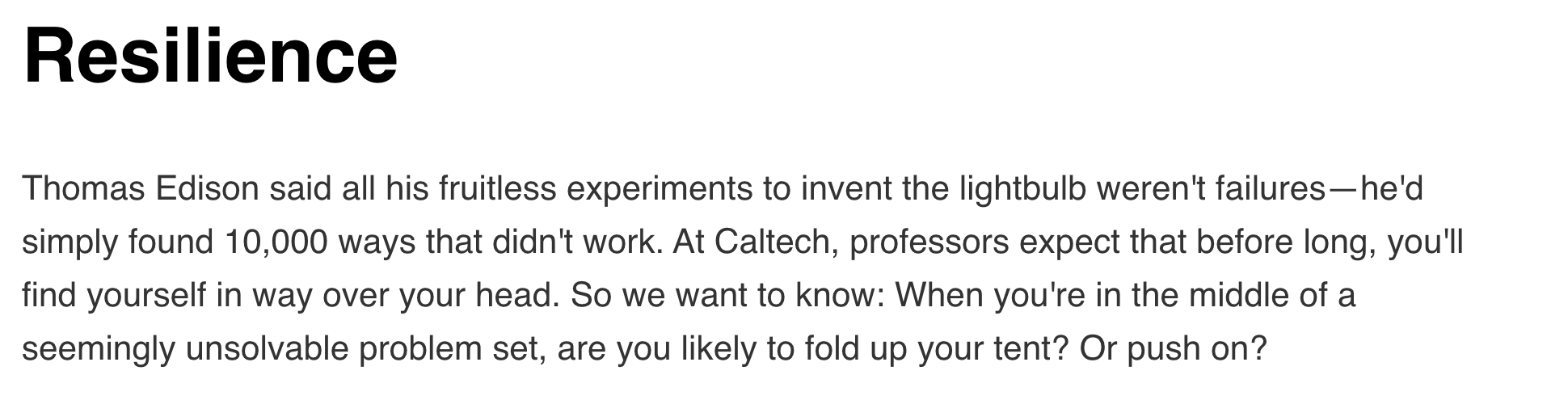 So what’s the takeaway? It’s the most obvious one, but people often forget about it, especially when they’re doing something really “hard.” Any subject, undertaking, or hobby will be unimaginably hard at the start, and you’ll have a choice — keep pushing your line or give up. Which choice you make will reflect your true intentions. If you keep going, that means it’s actually important to you and/or interesting. If not, then most likely there wasn’t a strong reason to be learning this thing in the first place, and it’s worth spending your time on something more valuable to you.
My other piece of advice — if someone wants to truly test themselves, take any abstract math course at university. I guarantee there are only two outcomes: you’ll either give up and drop the course, or you’ll understand the material and literally rise from the ashes, becoming a completely new person.